
These companies have expanded throughout Europe in a short period of time. Currently operating in Spain 35 airlines, 15 European countries.
With 2003 data, Spain has received more than 10.5 million passengers on more than 78000 international flights. This year, the use of cheap flights grew around 34%, meaning that more than 2.8 million passengers shifted to airlines flights.
The graphs below show how they are equating the use of these companies in Spain:

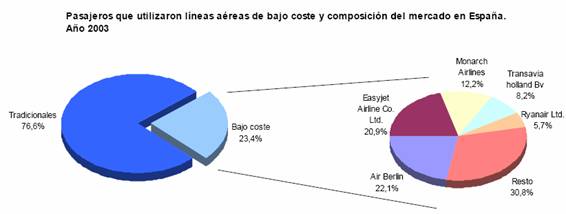
This growth is that Spain is a destination within the preferences of European consumers, good weather, fun, inexpensive access to holiday homes (taking into account the purchasing power ),...
The success of these companies is, in reducing costs of these companies are reflected in smaller planes, less comfort, and reduced costs to buy a ticket online. What has been translated into economic terms that these companies are specialized in the segment of the demand for flights to lower-middle income, so that consumers could not use the plane (or, less frequently) now used by more . We see this reasoning in the following graph:
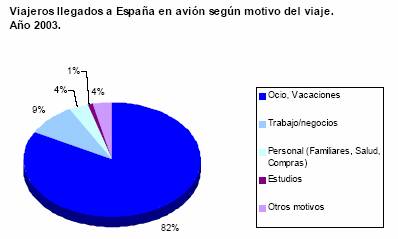
Then, before this change in preferences, the largest airline of Spain, has been left out of this market, with consequent loss of customers and profits. Iberia
reaction has been slow to manifest, last March 2006, the press office of Iberia has announced it will fight these low-cost companies, announcing that he will lower the price of the tickets to some European destinations. In conclusion of this release, see the reaction of Iberia in the price war emerged for the companies' low-cost, but Iberia triumph in this hostile market simply by lowering prices without creating a subsidiary, as have other European companies ...


0 comments:
Post a Comment